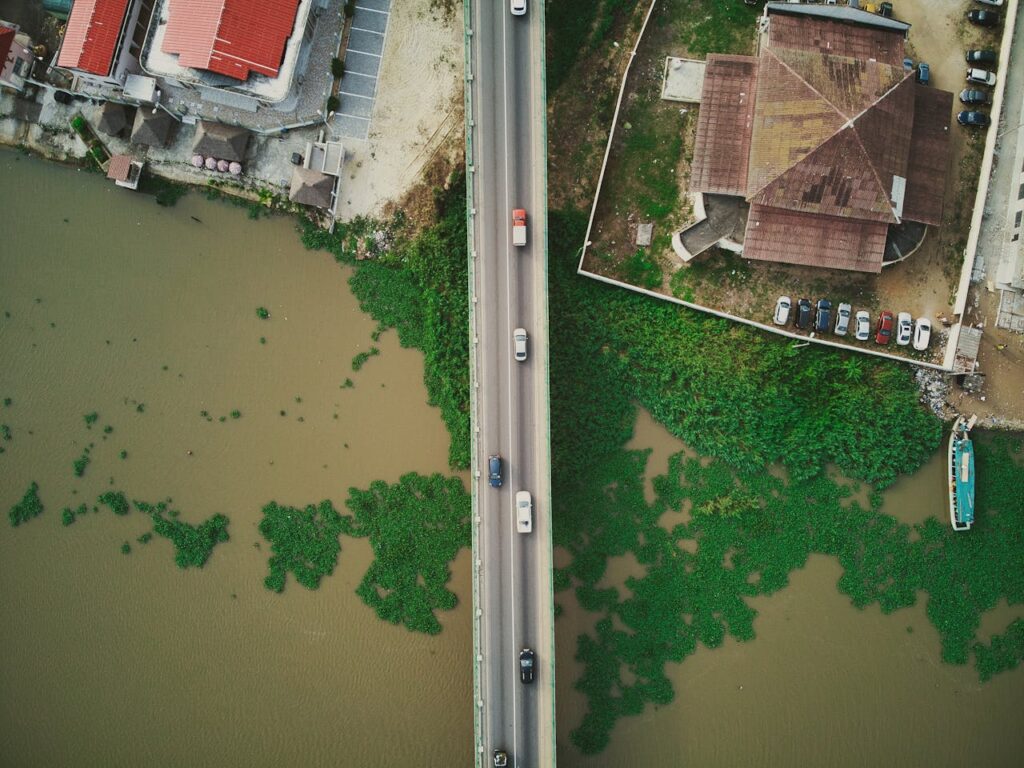
I’m an Abidjanaise, born and raised in Cocody, and it’s now been over a year since I settled down in Grand-Bassam. Even when we lived in the United States, we used to dream of living here: by the ocean, close to family, yet still in our own little bubble. It seems like the perfect balance.
Fast forward. November 2022. We first returned to Abidjan—Cocody to be precise—just 10–15 minutes away from several family members. It was the perfect soft landing. That choice gave us the chance to readjust gently to Ivorian life, with the reassuring support of loved ones.
Then, in December 2023, we finally took the leap toward our coastal dream: living in Grand-Bassam.
So, what convinced us to move away from Abidjan? Why choose Bassam as a long-term home? Here are all the reasons why living in Grand-Bassam might be a good alternative to Abidjan.
1. Living in Grand-Bassam Means Lower Rent for More Space
This is probably the first thing you’ll notice: the cost of living in Grand-Bassam is significantly lower than in Abidjan, especially when it comes to housing.
When we visited the house that would become our first Bassam home, we couldn’t believe it. A large living room, spacious bedrooms, both indoor and outdoor kitchens, and a huge upstairs terrace—all of this for 200,000 CFA francs less than our previous rent in Abidjan for a similar space.
Here, villas with gardens, terraces, and sometimes even pools are common. And you can pay up to half of what you’d spend in some upscale neighborhoods of Abidjan. For families or remote workers who want space and comfort, living in Grand-Bassam means living better—for less.
2. Living in Grand-Bassam Means the Ocean is Just Steps Away
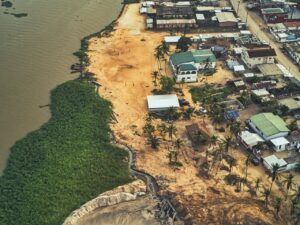
One of the greatest joys of life in Bassam? The sea.
The beach is accessible every day: morning walks, swimming, and sunsets.
Some beaches are private (attached to restaurants or hotels), but public beaches exist from Modeste to Azuretti. The vibe is calm, especially on weekdays. On weekends, families and groups arrive in numbers, but the energy remains cheerful and relaxed.
⚠️ A few cautions though: some stretches of beach are still poorly maintained, with visible trash. And there are no lifeguards. So you have to be extremely vigilant when you go to the beach in Grand Bassam, especially with children.
3. Grand-Bassam Makes Escapes to Assinie, Bonoua, or Ghana Easy
Grand-Bassam is strategically located for exploring southeastern Côte d’Ivoire.
In less than 30 minutes, thanks to the new highway, you can be in Assinie. Quick beach weekends or spontaneous getaways are simple.
Looking for calm? Head to Bonoua, with its Abouré villages and treetop adventure park.
Want to go international? Ghana is only a few hours away by road, via Aboisso.
Living in Grand-Bassam makes it easy to get away—without the logistical headaches.
4. Life in Bassam Means Easier Traffic and Less Stressful Admin
If you’ve experienced Abidjan’s traffic jams, you know.
Here, driving is calm. Very few traffic lights (you could count them on one hand), short commutes, and a more relaxed pace on the road. With the new highway open, the old Bassam road is a bit less congested (though yes, some trucks still linger… but that’s another debate).
Administrative tasks are also simpler: less waiting at city hall, banks, or public offices. A rare luxury you quickly learn to appreciate.
5. Grand-Bassam is a Human-Sized City with a Slower Rhythm
Living in Grand-Bassam means slowing down. You walk more, breathe easier.
It’s ideal for families, freelancers, artists, or simply anyone longing for more peace without cutting themselves off from the world.
Evenings are quiet, days less stressful. If you enjoy simple pleasures—coffee on a terrace, a walk on the beach, the soothing sound of the ocean at night—you’ll be in your element.
A small downside: nightlife options are limited. A few maquis, some bars, and the occasional concert (increasing recently, to be fair)… But it’s nothing like Abidjan’s buzzing scene. If you thrive on an active nightlife, Bassam might feel too quiet.
6. Residents of Grand-Bassam Have Access to All Essential Services
Contrary to stereotypes, Grand-Bassam isn’t “disconnected.” You’ll find everything you need for a comfortable life.
- Banks: SGBCI, BNI, SIB, Ecobank, microfinance institutions like COOPEC and MUCREFAB.
- Supermarkets: modern grocery stores and shops (Sococe, Socofrais, Auchan, plus many local options), as well as a daily open-air market.
- Healthcare: several reliable local clinics (Clinique Siloe, Clinique l’Océan, Clinique Gloire à Dieu, among others) and a large general hospital currently being renovated.
- Schools: Ivorian, French, and even bilingual options. Plus, the International University of Grand-Bassam and the Ivorian Institute of Technology.
- Library: one of the rare municipal libraries in Greater Abidjan, with affordable memberships (2000–3000 CFA per year).
- Administrative Services: from notarizing documents to registering for the national health coverage (CMU), you can do it all locally at Bassam’s city hall, sub-prefecture, or tribunal.
In short: everything you need is here, without always having to go back to Abidjan.
7. Living in Bassam Means Enjoying a Rich Cultural Life
Grand-Bassam takes pride in its culture and identity. Each year, it hosts events that celebrate tradition, craft, and creativity.
- Abissa – the iconic festival of the N’Zima people, held late October to early November. It’s a week of traditional dances, royal appearances, community speeches, carnival vibes, and plenty of feasting.
- SIAB (International Week of Bassam Handicrafts) – more than 400 stands of artisans from over 20 countries, plus fashion shows and a gastronomic village.
- Festival of Grillades – a two-day celebration of Ivorian cuisine, especially grilled specialties, in a fun, laid-back setting.
- Abouré Generation Ceremonies in Moossou (OFWA) – traditional rites that mark generational transitions, blending ancestral wisdom with community life.
These events animate the city year-round, attracting both locals and visitors from across the country and abroad.
8. A UNESCO World Heritage Town
Grand-Bassam is not just a beach town—it has been a UNESCO World Heritage Site since 2012, thanks to its colonial past. It was the first capital of Côte d’Ivoire under French colonial rule.
Living in Grand-Bassam means living in a kind of open-air museum:
- The Quartier France
- The 1914 Lighthouse
- The Governor’s Palace, now the National Costume Museum
- The Ceramics Center
- The Maison de l’Art, a contemporary art museum opened in 2025 in the former Post and Customs Hotel.
Artisanal craft is everywhere: pottery, ceramics, basketry, jewelry, sculpture, batik. Bassam claims the title of largest artisanal hub in West Africa.
Living in Grand-Bassam: A Conscious Lifestyle Choice
Living in Grand-Bassam is about finding balance:
Between nature and culture, between tradition and modernity, between calm and accessibility.
Here, you live better, more peacefully—while staying close to Abidjan.
And maybe that’s the ultimate luxury?
What about you?
Have you ever thought about living in Grand-Bassam? Or maybe you already do?
Share your experience or ask me your questions in the comments—I’d be happy to respond.
And don’t forget to subscribe to my newsletter so you don’t miss the next article, where I’ll talk about some of the challenges of life in Grand-Bassam.
You might also like to read: